NYT Letter Boxed Answers Today (April 17, 2026) – Visual Solution
NYT Letter Boxed Answers, Cheats & Guide – April 17, 2026
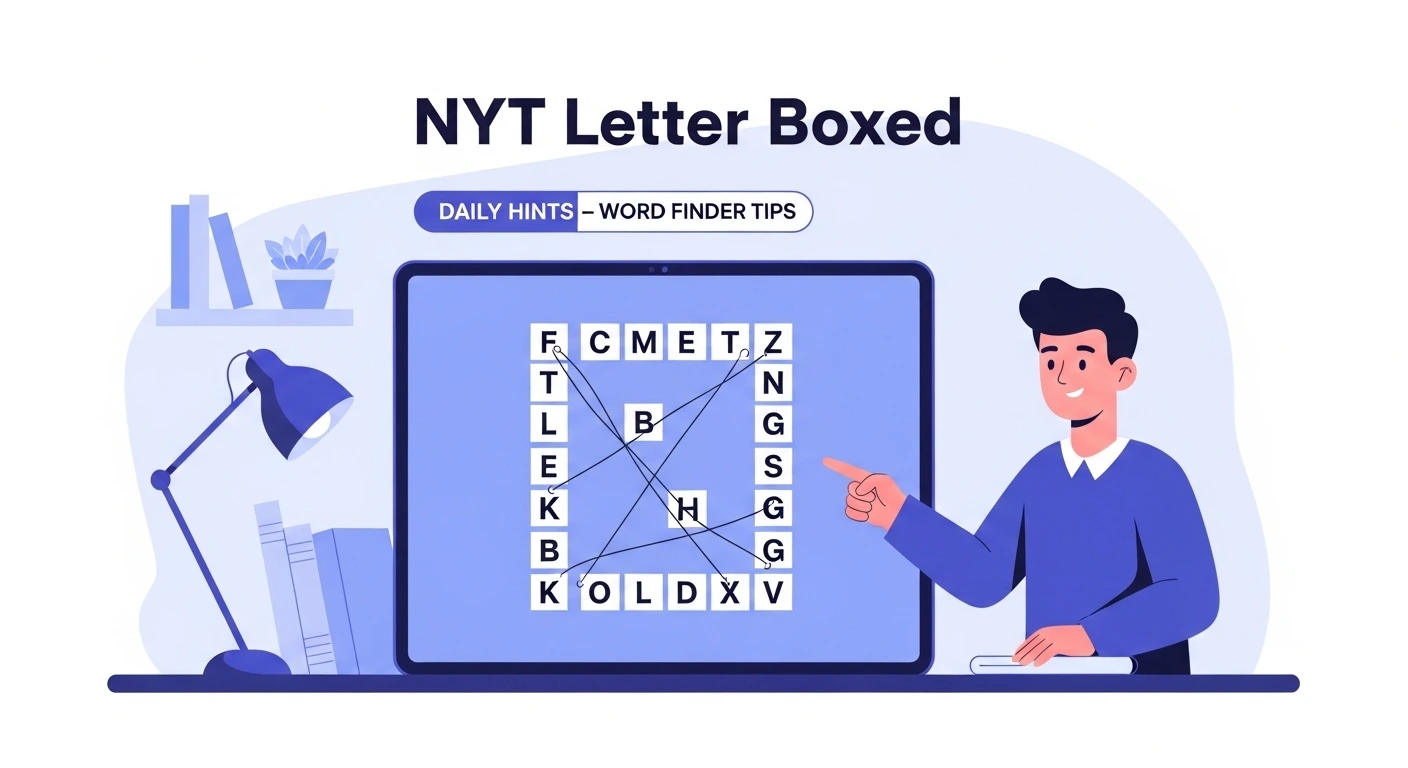
Table of Contents
- Today’s Puzzle Overview
- 🧠 Deep Mechanic Analysis & Optimal Paths
- ✅ Today’s Winning Solutions
- Frequently Asked Questions
Today’s Puzzle Overview
The board for April 17, 2026 features four sides: AEK, BCU, OGI, and NPL. Each side supplies three letters that you cannot reuse within a single word. The challenge is to connect all twelve letters using the fewest words possible, respecting the side‑switch rule.
Why This Layout Is Tricky
The vowel distribution is uneven. A and E sit together, while I lives on the opposite side. That forces you to bridge the gap with consonants that appear on both sides, such as N and G. The presence of high‑frequency letters U and O invites longer words, but you must avoid repeating a side.
What the Goal Looks Like
To finish, you need a chain where the last letter of each word becomes the first letter of the next. The optimal solution uses just two words, a rare feat that demands perfect side‑hopping and a keen eye for suffixes.
Interactive Solution Reveal
Tap the empty boxes below the board to reveal today’s exact answer, letter by letter!
Possible Solutions: Explore Alternative Word Pairs
While the NYT provides an official 2-word answer, the game allows you to solve it in 3 or even 4 words! Here are the best alternative words from today’s dictionary to build your own paths:
🔥 Epic Words (Best for 1 or 2-Word Paths)
🧩 Connector Words (Best for 3-Word Paths)
🧠 Deep Mechanic Analysis & Optimal Paths
Understanding the board’s geometry is the first step. Treat each side as a mini‑alphabet. The moment you leave a side, you must land on a different one. This rule eliminates many tempting words and pushes you toward longer, multi‑syllabic options.
Letter Frequency & Word Construction Logic
English favors E, A, O, and U as vowel anchors. On today’s board, E and A share a side, so any word that starts with them must quickly jump to a side containing a consonant. The letter G appears only on the OGI side, making it a perfect bridge because it also ends many gerunds.
Notice the suffix “‑ING”. It uses I, N, and G, each from a different side (OGI, NPL, OGI). Adding “‑ING” to a base word lets you consume three letters in one swoop while obeying the side‑change rule.
Strategic Path to the Two‑Word Solution
Start by spotting a word that can incorporate the rare K from the AEK side. “UNBLOCKING” does exactly that. It begins with U (BCU), moves to N (NPL), then to B (BCU) – a quick side hop – and continues through L, O, C, K, I, N, G. Every transition respects the rule, and the word consumes eleven of the twelve letters, leaving only P and A unused.
The leftover letters sit on opposite sides (AEK and NPL). The only legal connector that starts with the final G of “UNBLOCKING” and uses the remaining letters is “GAPE”. It begins with G (OGI), then grabs A (AEK), P (NPL), and ends with E (AEK). The chain “UNBLOCKING → GAPE” satisfies the last‑letter‑first‑letter rule perfectly.
Alternative Paths and Why They Fail
Many solvers try “UNBLOCK” + “INGAPE”. The first word stops short of using K and forces a third word, breaking the two‑word goal. Others attempt “UNBLOCKING” + “APED”. “APED” starts with A, not the required G, so the chain collapses. The key is the exact match: the ending G of the first word must be the opening G of the second.
Shorter three‑word combos like “UNBLOK” + “ING” + “GAPE” waste moves and increase the risk of side repetition. The two‑word route remains the most efficient and elegant.
✅ Today’s Winning Solutions
| Word 1 | Word 2 | Why It Works |
|---|---|---|
| UNBLOCKING | GAPE | Ends with G, starts next word with G; uses every letter except A and P, which GAPE covers. |
Post-Game Analysis
The solution hinges on two linguistic tricks. First, the “‑ING” suffix lets you sweep three letters (I, N, G) while staying on the OGI side for the final G. Second, “GAPE” is a rare four‑letter word that begins with the exact needed G and finishes the puzzle by pulling the remaining A and P from their respective sides.
Players who focus on high‑frequency suffixes often overlook “GAPE” because it feels archaic. Recognizing it as a valid NYT entry is the secret that separates casual solvers from masters.
Frequently Asked Questions
- Q: What is the optimal two‑word answer for April 17, 2026?
- A: The answer is UNBLOCKING followed by GAPE. The first word ends with G, which starts the second word.
- Q: Why does UNBLOCKING work better than shorter words?
- A: UNBLOCKING uses eleven of the twelve letters in one go, leaving only A and P for the second word, which GAPE captures.
- Q: How do I ensure I follow the side‑switch rule?
- A: Track each letter’s side; never use two consecutive letters from the same side within a single word.