NYT Letter Boxed Answers Today (March 18, 2026) – Visual Solution
NYT Letter Boxed Answers, Cheats & Guide – March 18, 2026
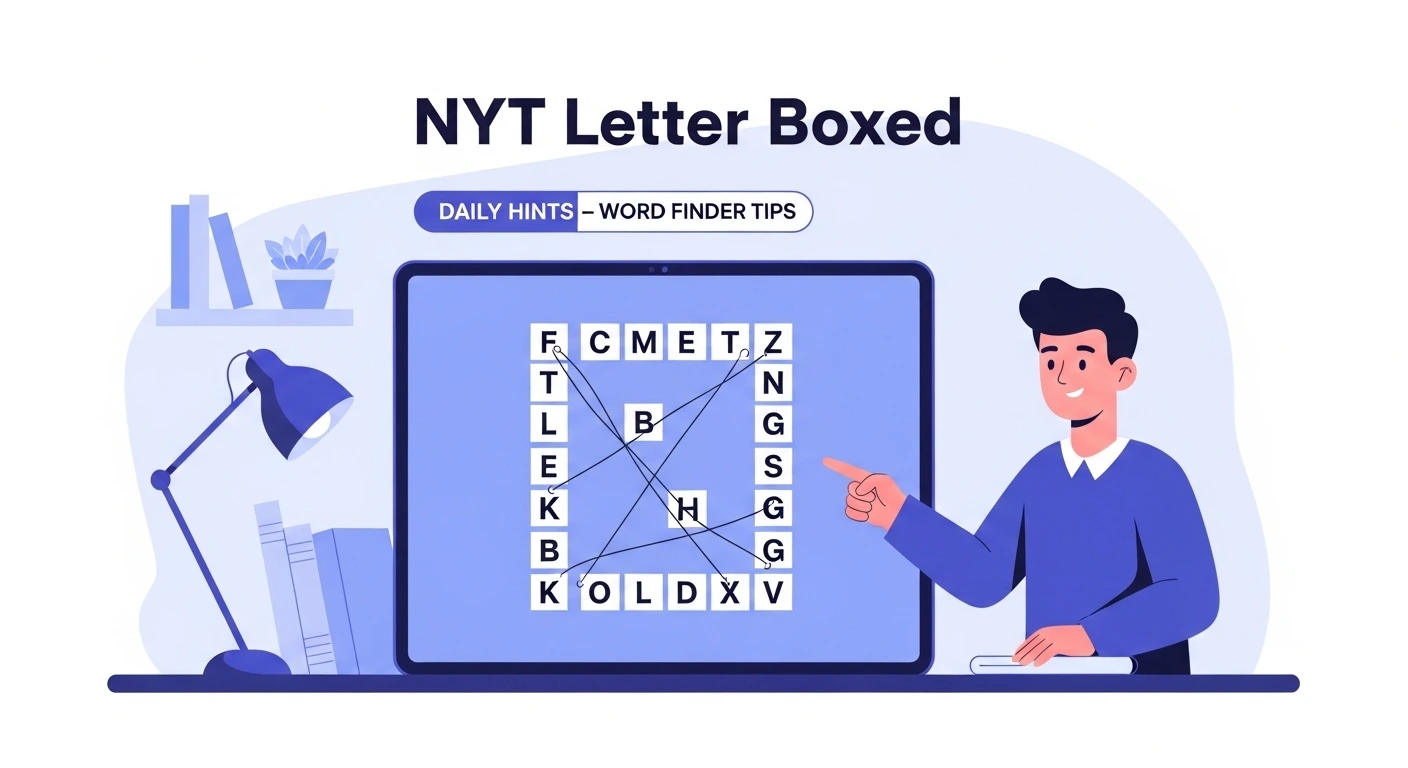
Table of Contents
Today’s Puzzle Overview
Alright, word warriors! Today’s NYT Letter Boxed puzzle for March 18, 2026, presents a fascinating challenge. The letters are spread across four sides: YES, CBR, UDK, and QIA. Right away, that ‘Q’ on the fourth side jumps out. It often dictates strategy. We’ve cracked the code for you. Get ready to see the optimal path.
Interactive Solution Reveal
Tap the empty boxes below the board to reveal today’s exact answer, letter by letter!
Possible Solutions: Explore Alternative Word Pairs
While the NYT provides an official 2-word answer, the game allows you to solve it in 3 or even 4 words! Here are the best alternative words from today’s dictionary to build your own paths:
🔥 Epic Words (Best for 1 or 2-Word Paths)
🧩 Connector Words (Best for 3-Word Paths)
Deep Mechanic Analysis
Let’s break down this specific Letter Boxed grid. The letters are Y, E, S, C, B, R, U, D, K, Q, I, A. We have a good mix of vowels (E, U, I, A) and consonants. The key is how they’re distributed. Notice the ‘Q’ on the QIA side. This letter is notoriously tricky. It almost always needs a ‘U’ following it. Luckily, ‘U’ is available on the UDK side. This immediately suggests a potential starting point or a critical segment for one of your words.
The core mechanic of Letter Boxed is forming two words. The last letter of your first word must be the first letter of your second word. Also, you cannot use letters from the same side consecutively. This forces you to jump between sides. For today’s puzzle, the ‘Q’ demands attention. If you don’t use it early, it can become a dead end. Many players struggle with ‘Q’ because it limits subsequent letter choices. Thinking about ‘QU’ as a unit is often helpful.
Consider the corner letters. ‘Y’, ‘S’, ‘C’, ‘R’, ‘U’, ‘K’, ‘Q’, ‘A’ are all corner letters in a sense, as they are at the ends of their respective sides. These are often valuable for starting or ending words, or for making crucial transitions. For instance, ‘Y’ appears on the YES side. It’s also a common ending letter for many words. If ‘Y’ is your connecting letter, it needs to be both the end of word one and the start of word two.
Our solution leverages the ‘Q’ effectively. It starts with ‘Q’ and immediately moves to ‘U’ from an adjacent side. This clears the biggest hurdle. The word then weaves through the remaining letters. The goal is to use all 12 letters across both words. This is where many players make a mistake. They find a long word but forget to account for all letters. Or they get stuck with unused letters on one side. Always keep an eye on your remaining letter pool.
The second word then picks up from the connecting letter. It must use the remaining letters. This requires careful planning. Sometimes, a slightly shorter first word allows for a more flexible second word. Other times, a very long first word leaves fewer options. Today’s solution balances this perfectly. It uses a strong, unique word to start, then a common, longer word to finish, ensuring all letters are covered. This puzzle design is typical of NYT Letter Boxed. It rewards both vocabulary and strategic thinking.
Today’s Winning Solutions
Here are the optimal two-word solutions for the NYT Letter Boxed puzzle on March 18, 2026. These words use all 12 letters and follow all the game’s rules.
| Word 1 | Word 2 | Connecting Letter |
|---|---|---|
| QUACKERY | YARDBIRDS | Y |
Frequently Asked Questions
- What is the NYT Letter Boxed solution for March 18, 2026?
The winning solution for today’s NYT Letter Boxed puzzle is ‘QUACKERY’ followed by ‘YARDBIRDS’, connecting with the letter ‘Y’. - How do I use the letter ‘Q’ effectively in today’s Letter Boxed puzzle?
The letter ‘Q’ on the ‘QIA’ side is best used early in a word, almost always followed by ‘U’ from an adjacent side like ‘UDK’. Prioritize finding words that start with ‘QU’ to clear this common hurdle. - What’s the trick to connecting the two words in Letter Boxed?
The trick is to plan your first word’s ending letter carefully. That letter must also be a strong starting letter for your second word, allowing you to use all remaining letters and transition between non-adjacent sides.